
10 Myths About Guitar Playing That Every Beginner Should Ignore
- The American Guitar Academy

- Sep 13, 2025
- 6 min read
Updated: Sep 17, 2025
fdaWhen you’re starting out with guitar, the world of music can seem pretty intimidating, especially with all the myths and misconceptions floating around. You may have heard things like, “Small hands can’t play guitar.” or “You have to know how to read music to play guitar.” The truth? These myths are as reliable as a broken guitar string. They often end up scaring new players away or setting unrealistic expectations.
In this article, we’ll bust these myths wide open, giving you some encouragement and a friendly nudge to get started on your guitar journey with confidence.

1. “You Have to Practice for Hours Every Day to Get Good”
Many beginners think that if they’re not putting in hours of practice daily, they’ll never improve. Let’s face it, unless you’re aiming to become the next guitar legend by the end of the month, hours of daily practice just aren’t necessary. Practicing in small, consistent sessions is actually more effective than sitting for hours. Even 10–20 minutes a day of focused practice can help you build skills over time without the dreaded burnout.
Remember, quality over quantity. Practice smart, not hard. So, if your fingers are about to protest from marathon sessions, give them a break. Short, focused sessions can be more productive, and you’ll enjoy it more in the long run. For a beginner, we recommend practicing 20-30 minutes 3-4 times per week. That is enough to get you comfortable with the basics within a few months. You’ll be playing simple songs quickly.

2. “Small Hands Can’t Play Guitar”
Ah, the infamous “small hands” myth. Many people with smaller hands worry they’ll never be able to stretch across the frets or reach certain chords. Good news: small hands are no excuse for not rocking out! Plenty of iconic guitarists, like Angus Young of AC/DC, have smaller hands and manage to shred just fine. Tony Iommi and Django Reinhardt had severe hand injuries and still became legends! Most of the common chord forms are playable without any large stretches.
However, it takes time for your hands to adapt to the guitar. This is true for both large and small hands. It all comes down to technique and positioning. If you’re struggling, try angling your hand slightly and adjusting thumb placement. Also, consider trying a guitar with a slimmer neck, like a 3/4 size or a short-scale guitar, which can make those early stretches easier. Your hands will adapt over time—no hand size limits required.
3. “You Need Expensive Gear to Sound Good”
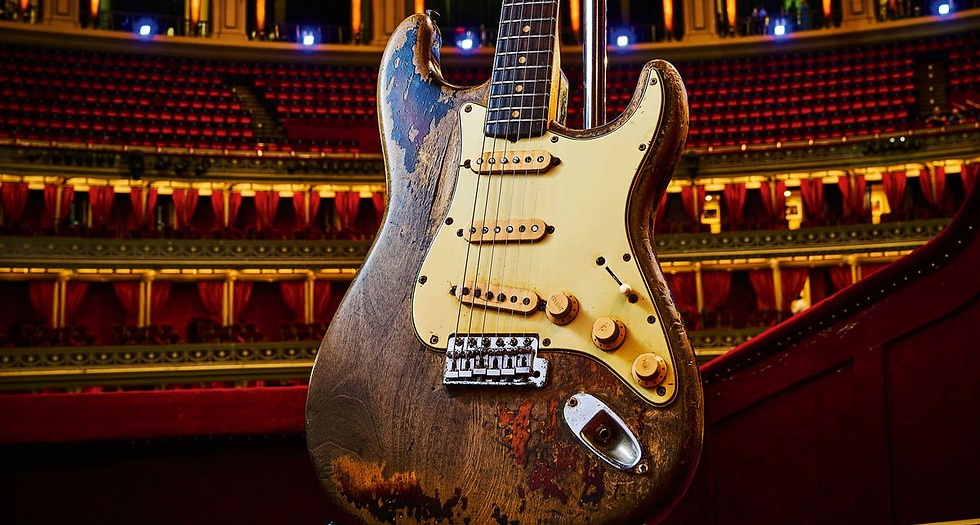
Here’s a myth that can quickly drain your wallet. Many beginners think they need top-of-the-line gear to play well. But let’s be real: you could hand Eddie Van Halen a toy guitar, and he’d still sound amazing. Playing well is about skill, not just expensive equipment. Your $150 starter guitar can sound fantastic if you know how to play it. I’ve personally met professionals who prefer to use cheap gear on the road and they make it sound incredible.
Focus on learning technique before worrying about high-end gear. Budget guitars and amps can sound surprisingly good, especially with a little tweaking (hello, new strings!). Once you’ve built up some skills, you’ll have a much better idea of what kind of gear you’d like to invest in, without breaking the bank.

4. “If You Can’t Read Music, You Can’t Play Guitar”
This myth probably came straight out of a conservatory, because it’s simply not true! Many of the world’s best guitarists—think Jimi Hendrix, Eric Clapton, or The Beatles’ Paul McCartney—couldn’t read sheet music. Guitarists can learn by using tablature (tabs), chord charts, or even by ear. This is part of the reason why the guitar became so popular, it’s very accessible without formal education.
Reading music is a valuable skill, but it’s absolutely not a requirement to start (or even to get really good). If you ever want to pick up reading music, go for it! But if not, don’t let that stop you. Guitar is accessible and flexible, and there are so many ways to learn that don’t involve reading sheet music.
5. “You Have to Start Young to Be Good”
This myth is about as old as rock 'n' roll itself. Many people believe if they didn’t pick up a guitar as a kid, they’ve missed their shot at being a great player. Not true! Plenty of people start learning guitar as adults and make tremendous progress. In fact, adults often have an advantage over kids in terms of focus, patience, and commitment.
Guitar playing isn’t just for teenagers in garages. Whether you’re 20, 40, or even 70, it’s never too late to start. Some of today’s best players started later in life, and you can absolutely reach your goals if you put in regular practice and keep a positive mindset.
6. “Only People with Natural Talent Can Learn Guitar”
The “natural talent” myth might be one of the most common. But guess what? Skills are built, not born! While some people may pick up certain things faster, guitar is a learned skill that anyone can improve on with practice. The idea that you need some magical “guitar gene” is misleading and, frankly, discouraging.
It’s normal to struggle with tricky chords or techniques at first. Instead of aiming for perfection right away, just focus on steady progress. The real “talent” is perseverance and patience. Every musician you admire got where they are through consistent practice, not just talent alone. So, next time you think, “Maybe I’m just not cut out for this,” remind yourself that even pros started as beginners.
7. “You Have to Master Classical Guitar First”
There’s a notion that you need to start with classical guitar before diving into other genres like rock, blues, or jazz. The truth? Classical guitar has its own set of techniques, but it’s not a prerequisite for other styles. While classical training can provide a strong foundation, it’s not necessary if you’re aiming to play rock, pop, folk, or any other genre.
If you’re interested in rock riffs, dive right into rock riffs! If blues calls your name, start learning some 12-bar progressions. Guitar is diverse, and every style has unique elements to teach. Focus on what excites you, and don’t worry about having to “earn” your way to playing the music you love.
8. “You’ll Be Good in a Few Weeks if You Practice Hard Enough”
Many beginners expect to be shredding solos within weeks, only to feel disheartened when it doesn’t happen that quickly. Guitar playing is a marathon, not a sprint. Learning guitar takes time, patience, and consistent practice. Sure, you’ll see progress, but it won’t happen overnight.
Set realistic goals, celebrate small victories (like nailing that first chord progression!), and enjoy the learning process. You’ll look back a few months later and see how far you’ve come. Remember, guitar is about the journey, not just the destination. I have found that most students (with practice) will see strong progress within 6 months to a year after starting.
9. “Learning Guitar Means No Time for Anything Else”
Some people think guitar practice will completely take over their free time. While it’s true that regular practice is important, you don’t have to become a hermit to make progress. Practicing for 20 minutes each day can yield great results without overwhelming your schedule.
Find a routine that works for you, whether it’s 15 minutes in the morning or 20 minutes before bed. Guitar playing should fit into your life in a way that’s enjoyable, not all-consuming. You’ll improve faster than you think, and you’ll still have time for friends, family, and other hobbies. It is more important that you develop a sustainable routine, similar to physical exercise.
10. “You Have to Memorize Tons of Chords to Start Playing Songs”
Many beginners worry that they need to know dozens of chords to play even the simplest songs. The thought of memorizing endless chord shapes can be overwhelming, and it’s easy to feel like you’re behind before you even start.
The Reality: Most songs—especially beginner-friendly ones—use just a few basic chords! In fact, many popular songs only use three or four chords (e.g., G-C-D). Learning a few simple chords like G, C, D, E, and A gives you access to countless songs across different genres. Mastering a handful of these chords allows you to start playing real songs almost immediately.
Encouragement: Start small and gradually add more chords as you go. You don’t need to know every chord under the sun to sound great. By focusing on a core group of chords and practicing transitions between them, you’ll gain confidence and be ready to tackle more complex songs over time. We recommend starting with “open chords”: C, A, G, E, D, Am, Em, Dm
Embracing Your Guitar Journey
So there you have it—ten myths about guitar playing that every beginner can safely ignore. Whether it’s the myth that only “talented” people can learn or the idea that small hands are a disadvantage, these myths don’t stand up to the real experience of learning guitar.
Approach your guitar journey with patience, persistence, and a healthy dose of fun. Remember, every guitarist was once a beginner, fumbling with their first chord or learning to tune by ear. The most important thing is to enjoy each step along the way. After all, the world of guitar is wide open, and you’re in for an adventure—so grab that pick and start playing!
-Ryan


