
My Adventure with Delay Pedals

If you have read any of my gear related blog posts in the past, you would have undoubtedly come across my advice where I explain the approach I recommend you take when buying new gear. This includes figuring out what you need, what gear you use, factoring in budget and various other points of interest. In this blog post, I want to walk you through my own personal journey that happened very recently – buying a new delay pedal.
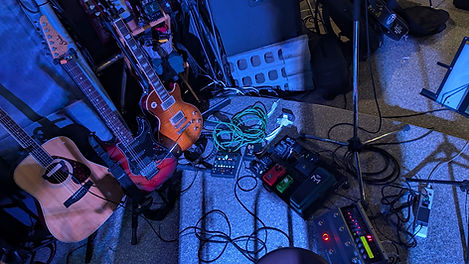
Read on to learn when I decided I wanted a new delay, how I made the decisions I did and what I ended up with.
Where did it all begin?
For a while I had been running a few select pedals in the front of my amplifier, and a TC Electronic Nova System in the effects loop. This meant that, when I was not using my Kemper Profiler Player, I had two effects boards and that was beginning to get annoying. Also, whilst the delay and the boost on the Nova System was great, the spring reverb was terrible. After selling some gear I did not use, as well as the Nova System, I was left with an ample budget to go shopping.
Let me add that I set up my rig with my amp (or backline) and within the Kemper in such a way that they function the same, with the only difference being the amount of space they take up. I did not NEED to buy any new pedals, but if I wanted to use a real amp then I would have to.
Making the decisions…
When it comes to modulation effects, I rarely use them to the point where I need to buy a dedicated unit. In the future I might invest in something like the Line 6 M9 or similar, but for now, modulation effects were at the bottom of my list of priorities.
Aside from the heaviest of guitar tones in extreme metal, I never play with a dry guitar tone so I needed a simple, cheap reverb pedal that had stereo functionality and dry-through capabilities (more on these later). The best options for used pedal were the TC Electronics Hall of Fame and the Boss RV-5. Both simple pedals with a much better spring reverb sound as well as a multitude of other reverb types, cheap and easy to replace. I ended up with the Hall of Fame because I had both owned one before and I found a deal online for less than ¥11000 delivered – this was the easy part.
This left me with a delay pedal at the top of my list to get… but which one?
What features do I need?
Here is a list of the features I needed in my new delay pedal, I will explain them afterwards.
Ability to save and select presets,
different delay types available if needed,
stereo capability,
dry-through signal,
proven track record,
a unique feature,
can be powered with my Strymon Ojai power supply,
reasonable used price and availability.
I want to be able to save space on the board and spots on my power supply, so having more than one delay pedal was out of the question. Therefore, because I need to use different types of delay with various settings and bending down to change within a song is not really possible, presets and different delay types was essential.
Sometimes there is a spare amp at a venue and it is always fun running in stereo, so this was an important point for me (of course it needed to sound good in mono too!). Having a dry-through signal allows you to mix a separate wet (effect ON) and dry (no effect) signal together, which allows for a clearer and more adjustable end result. If a delay pedal has both this feature, as well as stereo capability, but it runs into a reverb pedal that does not, then everything is summed together and any benefits would be lost – this is why the reverb pedal I wanted needed that feature too.
Most pedals can be powered with the Strymon Ojai, which is why I like it along with the size and modular potential. Something cool like the Yamaha Magicstomp or UD Stomp has a specific power supply that is not supported, rendering it cool but too much of a hassle.
Having a unique feature, something Andy Wood calls a ‘gag effect’ when talking about his whole pedal board, was not a deal breaker for me. In effort to stand out in the crowd most manufacturers will include some kind of interesting function.
I think the last point is fairly obvious!
What does that leave me with?
After some research and seeing what was available to me, I was left with this shortlist.
Strymon Timeline
Eventide Timefactor
Eventide H9
Keeley Halo
Empress Echosystem
TC Electronic Flashback X4
There are many specific reasons why I did not choose any of the pedals in the list above, but rather than exhaust the whole list and go on for days, let me give you the highlights.
Strymon Timeline –
I owned one of these a few years ago, and I was a little bit overwhelmed with the number of options available. It sounded good but I was not able to immediately get a tone that I loved. I did not want to go through that again!
Eventide Timefactor & H9 –
The Timefactor can be found relatively cheaply due to the age of the product, but there were none available locally for me to try, the H9 is expensive and fares better when implanted as part of a MIDI based rig.
Keeley Halo –
It was so close with this one – I played a few chords and immediately had a smile on my face when I played with one in a store. The Andy Timmons sound is great, but I am clumsy and the switches being close together for the presets swayed me otherwise.
Empress Echosystem –
There is no display on this pedal, and there are so many options for running in stereo, serial and everything else. I spent the first 10 minutes with this pedal being confused, but eventually got some amazing sounds from it. Some of the great features would be well received in other pedals – the price was eye-watering too!
What did I go for then?
As none of the pedal above ticked all the boxes, I was at a loss… until I made a discovery.
**an unknown combatant has entered the arena**
The fine folks at Japanese brand Free the Tone make a delay pedal called the Flight Time – but it is mono only. Then, after watching a video by That Pedal Show on delay pedals, I learned about the Future Factory. The stereo capable sister to the Flight Time delay.
Free the Tone - Future Factory

Despite this pedal looking extremely complicated, and it is actually very straightforward. There is no confusing menu diving, with every function having a labelled, dedicated control directly on the top of the unit. Despite having many preset slots, your four main sounds can be easily accessed from the footswitches, there are some great modulation sounds available and you can create equally simple or intricate delay sounds – what is not to love?!
Buying the Pedal
I was luckily able to find a store with this model in, so I could try it out before I committed to buying it. I was instantly hooked by the features, the sound and how easy it was to adjust everything. I also found that the highly detailed controls for the repeats, EQ, modulation and everything else was not intimidating and encouraged me to learn the pedal properly.
The new price for the Free the Tone Future Factory is quite high, but I manged to find a reasonably priced option for sale online and, unlike guitars, effects pedals are pretty consistent so I was confident in my purchase. It helps the seller was a legitimate instrument store!
Final Thoughts
Hopefully having a detailed walkthrough on how I started this journey and decided on the right pedal for me will help you in your gear purchasing adventures in the future. This can be adjusted and applied to guitars, amps and other effects pedal – just make sure that you put in the leg work with your research to avoid a bad purchase and buyers remorse!


